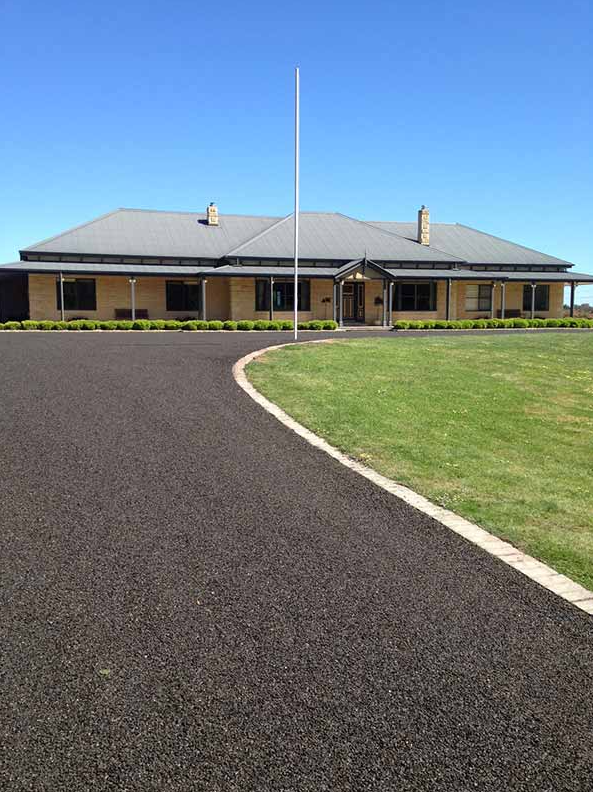
Choosing the right road surfacing method is essential for creating a durable, practical and reliable surface. Whether constructing a new access road, upgrading an existing gravel roadway or maintaining a deteriorating bitumen surface, the materials and installation methods used can significantly influence long-term performance.
Spray & Seal bitumen is a widely used road surfacing method that combines a bituminous binder with a layer of aggregate to create a protective, trafficable surface. When professionally applied over a properly prepared pavement, it can provide effective surface protection, suitable traction and dependable performance under regular vehicle use.
For property owners and businesses in Gundagai, NSW, Spray & Seal bitumen can be a practical option for private roads, rural access routes, driveways and other suitable trafficable areas. Understanding how the process works, where it performs best and why professional installation matters can help determine whether it is the right choice for a particular surface.
What Is Spray & Seal Bitumen and Why Is It Used for Road Surfacing?
Spray & Seal bitumen, also known as sprayed sealing, is a road surfacing process involving the application of bituminous binder followed by a layer of selected aggregate.
The aggregate is rolled into the binder to form a textured wearing surface.
Unlike asphalt, which is manufactured by mixing aggregates and bituminous binder before laying and compaction, Spray & Seal is constructed by applying the binder and aggregate separately.
The resulting seal provides a protective layer over the prepared pavement.
Its main functions include reducing water penetration, protecting the supporting pavement and providing a suitable surface for vehicle movement.
However, the seal itself is not intended to compensate for a weak or unstable foundation. The supporting pavement must already have sufficient strength for the expected traffic.
How Does the Spray & Seal Process Work?
Professional Spray & Seal installation involves several important stages.
Each stage contributes to the performance and durability of the completed surface.
1. Assessing the Existing Road
Before work begins, the condition of the existing road or pavement is assessed.
The contractor examines factors such as surface stability, drainage, traffic requirements and the condition of the supporting materials.
This helps determine whether the area is suitable for sealing or requires additional preparation.
2. Preparing the Pavement
The surface must be properly prepared before the bituminous binder is applied.
Depending on the site, preparation may involve grading, repairing damaged sections, correcting uneven areas and compacting suitable pavement materials.
Loose, unstable or contaminated material must be addressed to provide an appropriate foundation.
3. Applying the Bituminous Binder
A suitable bituminous binder is sprayed evenly across the prepared pavement using specialised equipment.
The application rate is selected according to the surface condition, aggregate characteristics and sealing requirements.
Correct binder application is important because insufficient or excessive binder can affect aggregate retention and surface performance.
4. Spreading the Aggregate
Selected aggregate is distributed over the freshly applied binder.
The aggregate provides the textured wearing surface and contributes to vehicle traction.
Aggregate size and characteristics are selected according to the intended application.
5. Rolling and Compaction
The aggregate is rolled into the binder to help establish proper contact and embedment.
This stage is important for achieving a consistent seal and retaining the aggregate under traffic.
6. Final Surface Treatment
Following installation, the surface is managed according to the sealing method and conditions.
Excess loose aggregate may need to be removed, and traffic may need to be controlled while the seal develops.
A properly completed process helps create a consistent and functional road surface.
1. Spray & Seal Helps Protect the Supporting Pavement from Water
One of the main purposes of a sprayed bitumen seal is to reduce water entering the pavement.
When rainfall penetrates unsealed or deteriorated surfaces, it can affect the supporting materials underneath.
If these materials become weakened, repeated vehicle loading may contribute to settlement, rutting and pothole formation.
A properly applied Spray & Seal treatment creates a protective surface that helps limit moisture penetration.
This is particularly valuable for roads where preserving the strength of the supporting pavement is essential.
However, effective drainage remains important.
Water should be directed away from the road through suitable surface levels and drainage arrangements rather than allowed to collect in depressions.
2. It Creates a Durable Surface for Suitable Traffic Conditions
Spray & Seal can provide dependable performance when the pavement is designed and maintained for the traffic it carries.
The aggregate forms the wearing surface, while the binder helps retain the aggregate and protect the pavement underneath.
This combination can be suitable for a range of road and access applications.
Potential uses include:
- Private access roads
- Rural property roads
- Residential driveways
- General vehicle access routes
- Suitable commercial access areas
- Existing sealed road maintenance
The suitability of Spray & Seal depends on traffic volume, vehicle weight, turning movements and the condition of the supporting pavement.
Areas subject to frequent heavy braking, tight turning or concentrated loading may require a different seal design or surfacing system.
Professional assessment helps establish whether Spray & Seal is appropriate for the intended use.
3. Spray & Seal Provides a Textured Road Surface
The aggregate used in Spray & Seal creates a textured wearing surface.
When correctly designed and installed, this texture can provide suitable tyre contact and skid resistance for the intended traffic conditions.
Surface texture is particularly important for roads that experience regular vehicle movement.
However, performance depends on the characteristics of the aggregate, binder application and ongoing condition of the seal.
Excessive aggregate loss, binder flushing or surface contamination can affect the finished surface.
Professional material selection and application help achieve the required surface characteristics.
4. It Can Be Used to Upgrade Suitable Gravel Roads
Gravel roads can experience surface deterioration under repeated traffic.
Common problems include loose aggregate movement, dust, corrugations, potholes and wheel rutting.
For suitable roads, Spray & Seal may provide an effective way to establish a bound wearing surface over a properly prepared pavement.
However, applying bitumen directly over loose or unstable gravel is not sufficient.
The supporting pavement must be assessed and prepared before sealing.
This may involve:
- Correcting the road profile
- Removing unsuitable material
- Improving unstable sections
- Adding suitable pavement material
- Grading the surface
- Completing appropriate compaction
- Establishing effective drainage
Once the foundation is suitable, Spray & Seal can be applied to provide a protective surface.
For property owners in Gundagai considering an upgrade from gravel, professional assessment is important for determining whether the existing road can support a sprayed seal.
5. Spray & Seal Can Help Extend the Serviceability of Existing Roads
An existing bitumen road may begin showing signs of ageing while the supporting pavement remains structurally sound.
Over time, the binder can deteriorate, aggregate may become loose and small defects may develop.
Where the pavement remains suitable, a resealing treatment may help restore surface protection.
This can reduce water penetration and provide a renewed wearing surface.
However, resealing is not appropriate for every deteriorating road.
If the pavement contains significant settlement, widespread structural cracking or unstable supporting material, deeper repairs may be required before a new seal is applied.
A professional assessment helps determine whether resealing is sufficient or whether additional rehabilitation is necessary.
6. It Offers Practical Maintenance Options
Spray & Seal surfaces require ongoing inspection and maintenance, just like other road pavements.
One advantage is that suitable sections can often be maintained through targeted repairs or resealing when deterioration is identified early.
Common maintenance concerns include:
- Localised aggregate loss
- Surface cracking
- Damaged pavement edges
- Potholes
- Areas of water penetration
- Deteriorating previous repairs
- Surface wear
The appropriate treatment depends on the cause and extent of the damage.
For example, isolated pavement defects may require localised repairs before a reseal is considered.
Where the seal has aged but the supporting pavement remains stable, resealing may provide an appropriate maintenance option.
Regular inspections help identify when these treatments are needed.
7. Spray & Seal Is Versatile Across Different Road Applications
Spray & Seal is not limited to one type of roadway.
It can be considered for various access and road surfacing applications, provided the pavement structure and traffic conditions are suitable.
For example, a private property road may have different requirements from a commercial access route.
The selected aggregate, binder and sealing method should reflect the intended use.
Professional contractors consider factors such as:
- Expected traffic volume
- Vehicle types
- Road geometry
- Existing pavement condition
- Drainage
- Surface texture requirements
- Environmental conditions during installation
These considerations help determine the appropriate sealing approach.
8. Professional Installation Helps Achieve Consistent Results
Spray & Seal relies on precise material application and careful surface preparation.
The performance of the completed seal depends on the interaction between the binder, aggregate and supporting pavement.
Incorrect application can contribute to problems such as:
- Premature aggregate loss
- Uneven surface texture
- Binder flushing
- Poor aggregate embedment
- Inconsistent surface coverage
- Reduced seal durability
Professional installation involves selecting suitable materials, applying the correct binder and aggregate rates, and completing the necessary rolling and finishing procedures.
It also requires consideration of weather and pavement conditions during installation.
These factors are important for producing a reliable and consistent surface.
What Is the Difference Between Spray & Seal and Asphalt?
Although Spray & Seal and asphalt both use bituminous binder, they are different surfacing systems.
Asphalt is manufactured by combining aggregate and bituminous binder into a mixture before it is laid and compacted.
Spray & Seal involves spraying binder onto a prepared pavement and applying aggregate separately.
Both methods can provide durable surfaces when correctly designed and installed, but they are suited to different conditions.
Asphalt may be more appropriate for certain heavily trafficked areas, car parks and locations experiencing frequent turning or braking movements.
Spray & Seal may be suitable for roads, access routes and other applications where a sprayed seal provides the required surface characteristics.
The most appropriate choice depends on the pavement structure, traffic loading and intended use.
Neither method should be selected solely on appearance.
Why Is the Foundation Important for Spray & Seal Roads?
A Spray & Seal surface relies heavily on the strength of the pavement beneath it.
The seal provides surface protection and a trafficable wearing layer, but it does not significantly strengthen an unstable road foundation.
If the supporting pavement contains soft areas, poor compaction or unsuitable material, repeated vehicle loading may cause movement.
This can lead to:
- Wheel rutting
- Localised settlement
- Cracking
- Potholes
- Surface deformation
- Premature seal failure
Before sealing, the pavement should be assessed to determine whether the supporting layers are capable of accommodating the intended traffic.
Where necessary, unstable sections should be repaired or reconstructed before the seal is installed.
Proper foundation preparation is essential for reliable long-term performance.
How Does Drainage Affect Spray & Seal Performance?
Effective drainage helps preserve the condition of a sealed road.
Although a sprayed seal is intended to reduce water penetration, damaged sections and poorly drained areas can still allow moisture to affect the pavement.
Standing water can also contribute to deterioration where defects are already present.
A professional contractor should assess the road’s surface profile and surrounding drainage conditions before installation.
Important considerations include:
- Surface falls
- Road camber or crossfall
- Low points
- Existing drainage outlets
- Water flow along pavement edges
- Areas affected by previous moisture damage
Correct drainage planning helps protect the supporting pavement and reduces the likelihood of water-related deterioration.
How Long Does Spray & Seal Bitumen Last?
The service life of a Spray & Seal surface depends on several factors.
These include the condition of the supporting pavement, traffic loading, material selection, installation quality, drainage and maintenance.
A properly installed seal over a stable pavement can provide reliable service, but its condition should be monitored over time.
Heavy traffic, repeated turning movements, moisture-related problems and neglected surface defects can accelerate deterioration.
Regular inspections and timely maintenance help identify when repairs or resealing may be necessary.
Rather than relying on a fixed lifespan, it is more useful to assess the actual condition of the road and plan maintenance accordingly.
What Are the Signs That a Spray & Seal Road Needs Attention?
A sprayed seal may gradually deteriorate through ageing and regular traffic.
Property owners should monitor changes in surface condition, particularly where vehicle movements are frequent.
Warning signs include:
- Increasing aggregate loss
- Exposed binder or bare patches
- Cracking
- Pothole formation
- Surface depressions
- Damaged road edges
- Water collecting in low areas
- Repeated deterioration of repaired sections
Some loose aggregate can be expected shortly after a new seal is installed, but continuing or extensive aggregate loss may indicate a problem requiring assessment.
Early identification of deterioration helps determine whether localised repairs, resealing or deeper pavement work is necessary.
Why Choose a Professional Contractor for Spray & Seal Bitumen?
Successful Spray & Seal installation requires more than applying binder and aggregate to an existing road.
The pavement must be assessed, prepared and sealed using methods appropriate for the site.
An experienced contractor can evaluate the existing road and determine whether the surface is suitable for sealing.
This includes considering pavement strength, drainage, expected traffic and the condition of any previous surfacing.
Professional application also helps ensure the binder and aggregate are distributed consistently and the completed seal receives appropriate rolling and finishing.
For property owners and businesses in Gundagai, professional assessment can help determine whether a new Spray & Seal surface, resealing or more extensive pavement preparation is required.
The objective is to provide a road surface that is suitable for its intended use and supported by a stable pavement structure.
Conclusion
Spray & Seal bitumen is a practical road surfacing method that combines a bituminous binder with selected aggregate to create a protective, textured wearing surface.
When professionally installed over a properly prepared pavement, it can help reduce water penetration, provide suitable traction and support reliable vehicle access. It can also be used for suitable gravel road upgrades and maintenance of existing sealed roads.
However, the durability of a Spray & Seal surface depends on more than the seal itself. Ground preparation, pavement strength, drainage, material selection and correct application all influence how well the road performs.
For property owners and businesses in Gundagai, NSW, Gundagai Road Tek provides professional bitumen surfacing, Spray & Seal and road resurfacing services. If you are considering sealing an existing road, upgrading a gravel access route or restoring a deteriorating bitumen surface, contact our team to discuss your requirements and arrange an assessment of the most appropriate surfacing solution.
Call us on: 02 5926 2530
Click here to find out more about Gundagai Road Tek
Click here to complete our contact form and see how we can help with your Asphalt and Bitumen Surfacing needs.