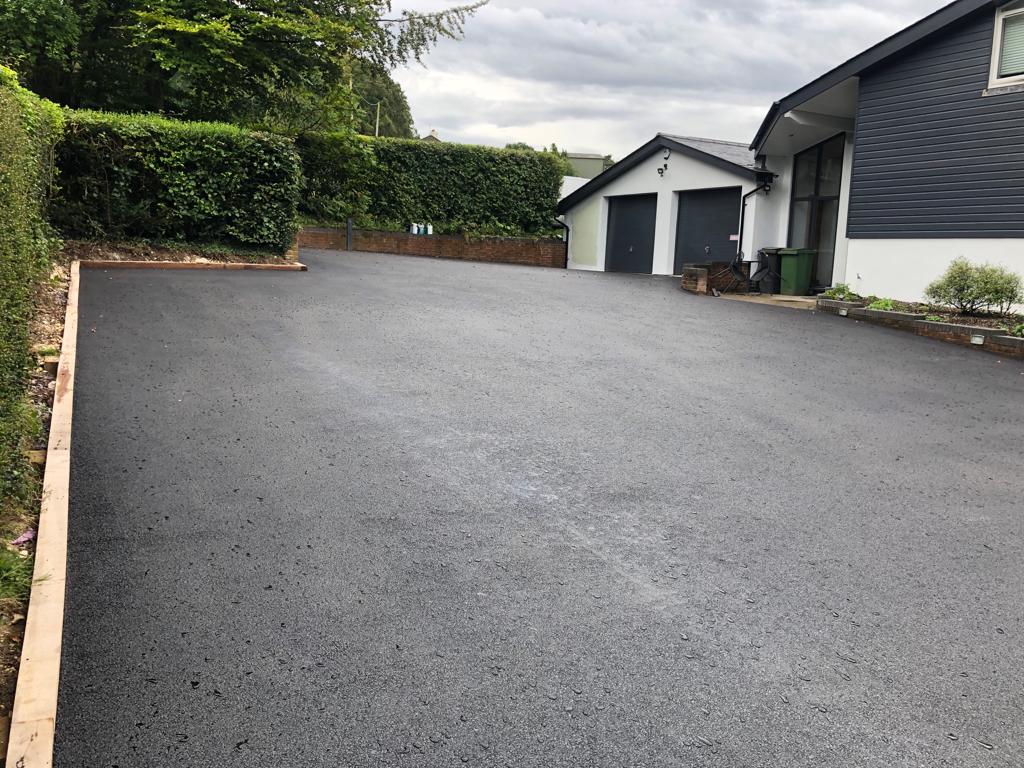
An asphalt or bitumen driveway does not normally deteriorate all at once. Cracks may appear first, followed by small depressions, loose material or an occasional pothole. At this stage, targeted repairs may be enough to restore the affected areas and prevent further deterioration. However, when damage becomes widespread or problems originate within the pavement foundation, continually repairing the surface may no longer address the real issue.
Understanding the difference between repairable surface deterioration and deeper pavement failure is important when deciding what to do next. For property owners in Gundagai, NSW, a professional driveway assessment can establish whether existing pavement can be preserved or whether reconstruction is required to provide a stable, dependable surface.
What Is the Difference Between Driveway Repair and Reconstruction?
Driveway repair focuses on particular defects while retaining most of the existing pavement.
Depending on the condition of the driveway, repairs may address:
- Isolated cracks
- Small potholes
- Localised surface deterioration
- Damaged edges
- Minor depressions
- Individual failed sections
Reconstruction is a more substantial process. Rather than treating only the visible surface, affected pavement materials may need to be removed so weaknesses within the supporting structure can be addressed before the driveway is rebuilt.
The right choice depends less on how unattractive the driveway looks and more on why the deterioration has occurred.
When Is Driveway Repair Usually Appropriate?
Repairs are generally most effective when damage remains localised and the surrounding pavement is structurally stable.
For example, one pothole does not necessarily mean an entire driveway has failed. Similarly, several minor cracks across an otherwise sound pavement may be manageable if they are addressed before water causes further deterioration.
A driveway may remain suitable for repair when:
- Defects are confined to small areas
- Most of the surface remains stable
- There is little significant deformation
- The pavement is not sinking extensively
- Drainage is generally functioning correctly
- Repairs have not repeatedly failed in the same locations
Early intervention is particularly valuable because it can prevent minor defects from affecting the pavement underneath.
Cracks Need to Be Assessed by Type and Extent
Cracking is one of the most common reasons property owners begin considering driveway repairs.
Not all cracks have the same significance.
Isolated Cracking
A limited number of cracks may result from ageing or minor pavement movement. If the surrounding asphalt remains stable, appropriate repairs may help protect the driveway from further deterioration.
Widespread Interconnected Cracking
When cracks form extensive interconnected patterns, the problem can be more serious. This type of deterioration may indicate that the pavement is no longer receiving adequate structural support.
Covering extensive cracking without investigating the foundation may result in defects returning.
Potholes Do Not Automatically Mean Reconstruction
Potholes develop when sections of pavement break apart, often following a combination of cracking, water penetration, weakened support and repeated traffic.
An isolated pothole may be suitable for professional repair if the surrounding pavement remains sound.
The situation becomes more concerning when:
- Numerous potholes are developing
- Repaired potholes repeatedly return
- New potholes form beside previous repairs
- The surrounding surface is extensively cracked
- The pavement is noticeably moving or sinking
These patterns can indicate that deterioration extends beyond isolated surface defects.
Repeated Repairs Are an Important Warning Sign
One of the clearest indications that deeper investigation is required is when the same sections repeatedly fail.
If a pothole is repaired and soon returns, or cracks continually reappear around previous repairs, there may be an unresolved problem underneath.
Possible causes include:
- Weak pavement base
- Inadequate compaction
- Persistent water penetration
- Poor drainage
- Ground movement
- Insufficient structural support
Rather than continuing to treat the symptoms, the underlying cause should be identified.
Rutting and Depressions Can Point to Structural Problems
Wheel ruts and sunken sections are different from simple surface wear because they can indicate movement within the pavement structure.
Rutting develops when pavement materials deform under repeated vehicle loads. Depressions can also occur when supporting layers settle unevenly.
Minor localised deformation may sometimes be repairable. Deep or widespread movement, however, can suggest that the foundation requires attention.
Simply adding new asphalt over an unstable section does not necessarily prevent it from continuing to move.
Water Pooling Should Not Be Ignored
A driveway should be shaped so rainfall can drain away effectively.
If water begins collecting in areas where it previously drained properly, the pavement may have settled or deformed.
Standing water can then accelerate deterioration by entering cracks and weakening vulnerable pavement layers.
Persistent pooling can therefore be both a symptom and a cause of driveway problems.
Before repairing or reconstructing the pavement, drainage and surface levels should be considered as part of the overall assessment.
The Condition of the Base Is Critical
The base beneath an asphalt or bitumen driveway provides much of the structural support required to carry vehicles.
If the base remains stable, preserving the existing pavement through repairs or resurfacing may be possible.
If substantial sections of the base have failed, surface repairs alone are unlikely to provide a durable solution.
Potential indications of base problems include:
- Extensive settlement
- Deep rutting
- Widespread interconnected cracking
- Recurring potholes
- Soft or unstable sections
- Significant pavement deformation
Determining the condition underneath the visible surface is one of the most important parts of deciding whether reconstruction is necessary.
Could Resurfacing Be the Middle Ground?
The choice is not always limited to small repairs or complete reconstruction.
Asphalt resurfacing can provide another option where surface deterioration has become widespread but the supporting pavement remains sufficiently stable.
Resurfacing typically involves preparing the existing pavement, repairing unsuitable sections and installing a renewed asphalt surface.
It may be worth considering when:
- The driveway has widespread surface wear
- Numerous minor cracks are present
- The existing surface has become rough
- Previous repairs have left an inconsistent finish
- The underlying structure remains serviceable
A professional inspection can determine whether the driveway provides an appropriate foundation for resurfacing.
When Is Reconstruction More Likely to Be Required?
Reconstruction becomes more appropriate when deterioration involves substantial portions of the pavement structure rather than only the wearing surface.
Signs that may indicate the need for reconstruction include:
- Extensive structural cracking
- Widespread sinking or deformation
- Deep rutting
- Numerous recurring potholes
- Significant base instability
- Persistent failures despite previous repairs
- Large areas affected by poor pavement support
Reconstruction allows failed materials and structural weaknesses to be addressed before a new surface is installed.
Why Covering a Failed Driveway Can Create Problems
A new asphalt layer can dramatically improve the appearance of an ageing driveway, but appearance alone does not determine pavement performance.
If a structurally unstable driveway is simply covered, movement underneath can eventually transfer through the new surface.
Cracks may return, depressions can reappear and newly installed asphalt may begin deteriorating earlier than expected.
Professional preparation ensures the condition underneath is appropriate for whatever treatment is selected.
Consider How the Driveway Is Being Used
The vehicles using a driveway can also influence the appropriate repair strategy.
A pavement regularly carrying heavier vehicles experiences different stresses from one used predominantly by passenger cars.
An assessment should consider:
- Vehicle types
- Frequency of use
- Heavy vehicle movements
- Regular turning areas
- Parking locations
- Changes in how the property is used
If traffic demands have increased since the driveway was originally constructed, the existing pavement structure may no longer be appropriate for its current use.
Why Early Assessment Provides More Options
Waiting until an asphalt driveway has completely broken apart can substantially limit the available restoration options.
Investigating defects early may allow localised repairs to preserve much of the existing pavement. Even when deterioration has become more extensive, timely resurfacing may still be possible if the foundation remains stable.
Useful warning signs to act on include:
- Cracks becoming wider
- New cracks appearing regularly
- Small potholes developing
- Loose surface material
- Edges beginning to break away
- Water collecting in depressions
- Previously repaired areas failing again
The objective is to intervene before deterioration spreads throughout the pavement structure.
Why Professional Assessment Matters
Deciding whether a driveway needs repair, resurfacing or reconstruction requires more than judging its appearance.
An experienced asphalt and bitumen contractor can assess:
- Crack patterns
- Pothole severity
- Surface deterioration
- Rutting and settlement
- Pavement stability
- Drainage performance
- Traffic requirements
- Previous repair areas
This provides a clearer understanding of why the driveway is deteriorating and which treatment is most appropriate.
A professional assessment can also help avoid unnecessary reconstruction when a pavement remains suitable for repair, while identifying situations where repeated surface treatments are unlikely to provide a lasting result.
Conclusion
A driveway generally remains suitable for repair when deterioration is localised and the pavement underneath is stable. Resurfacing may be appropriate when surface wear has become widespread but the underlying structure remains serviceable. Reconstruction becomes more likely when significant cracking, rutting, settlement, recurring potholes or base instability indicate that deterioration extends deeper into the pavement.
For property owners in Gundagai, NSW, the most important step is identifying the condition of the entire driveway before deciding how it should be restored. Gundagai Road Tek provides professional asphalt and bitumen driveway repairs, resurfacing and pavement solutions based on the actual requirements of each site. If your driveway is showing increasing signs of deterioration, contact our team for an assessment and advice on whether repair, resurfacing or reconstruction is the most suitable approach for dependable long-term performance.
Call us on: 02 5926 2530
Click here to find out more about Gundagai Road Tek
Click here to complete our contact form and see how we can help with your Asphalt and Bitumen Surfacing needs.